
A TOUCHSTONE REVIEW:
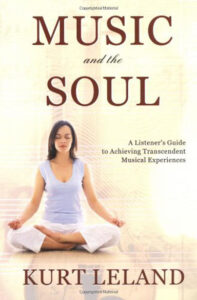
Music and the Soul: A Listener’s Guide to Achieving Transcendent Musical Experiences
by Kurt Leland
Hampton Roads (2005)
The Author: Kurt Leland
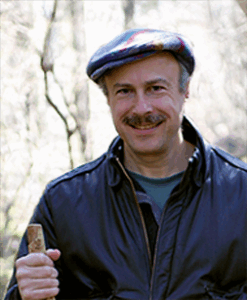
Boston-based author and composer Kurt Leland is a lecturer for the Theosophical Society and the author of books on out-of-body and near-death experiences as well as transcendental experiences arising from composing, performing, and listening to music. A specialist in the teachings of Annie Besant and Charles Leadbeater, he has also published Invisible Worlds: Annie Besant on Psychic and Spiritual Development and an annotated version of Charles Leadbeater’s The Chakras , as well as Rainbow Body: A History of the Western Chakra System from Blavatsky to Brennan and The Multidimensional Human: Practices for Psychic Development and Astral Projection .
The Book
It may seem strange to look for a chakra system in a book on music. But Music and the Soul is no ordinary book and Kurt Leland is no ordinary author. He is a historian of the Western chakra system as well as a composer and musician, and he uses the dynamics of the human energy body and the associated characteristics of eight vital energy centers to develop and organize his discussion of the “yoga of listening.”
A composer, consciousness researcher, and psychic, Leland intends to show in this book how to use music to produce well-being of mind and body, create uplifting moods, and enhance mystical states of consciousness. His soul-based, step-by-step music appreciation program is intended to teach readers how to listen to jazz, rock, and classical music in a focused, meditative way, so that they can achieve Transcendent Musical Experiences (TMEs).
TMEs, as Leland describes them, are “mystical peak experiences” that “guide us toward developing a greater awareness of our potentials as human beings in the physical, emotional, intellectual, and spiritual realms” and “can result in sudden realizations; or in spontaneous, ecstatic insights” and can “produce marvelous inner visions of colors and geometric forms unlike anything seen under normal conditions in physical reality.”
Leland wrote this book to fulfill his editor’s wish for a sequel to Cyril Scott’s examination of the way music serves as a conduit to spiritual realms, Music: Its Secret Influence Throughout the Ages, published in 1933, that would cover the latter half of the twentieth century. Cyril Scott, like Leland, was a composer, author, and Theosophist. His editor’s problem had been finding an author with the proper musical and spiritual training. Leland had both.
Leland’s goal with this book was “to develop a vocabulary for discussing music … based on intuitions that we all have about music that moves us … but never had the words for.” He conceived it to be a listener’s guide to achieving TMEs as well as a handbook. Throughout, Leland refers to the comprehensive teachings he received on this matter through channeled communications from his nonphysical spiritual teacher, his own “trance personality,” which he considers to be “an apparently reliable, often extremely wise source of information.”
In Part 1, “Music and the Soul,” Leland defines what he means by TMEs and provides exercises intended to prepare the reader for the yoga of listening described in Part 2. Part 2, “The Yoga of Listening,” lays out the principles of a new kind of yoga that involves listening to music in a meditative way “something like the nada yoga of the Tantric tradition” – a yoga of listening that allows one “to isolate each chakra and stimulate it through listening to a certain kind of music.”
Leland considers the chakra system, from root to crown, to be “an effective way of describing the categories of expression as a vertical continuum.” He describes each of the chakras as centers along this continuum, detailing “their characteristics, the lessons they have to teach, and the kinds of music that activate them.”
Using the concept of chakras as a framework for the continuum of rising life-force energy flow, he devotes an entire chapter to demonstrating how this continuum relates to music and the chakras, involving “not merely activating the eight centers, but welding them together into a seamlessly functioning whole.”
Part 3, “Music of the Soul,” explains how to use the yoga of listening as a spiritual practice and “how composers and performers can become spiritual teachers for us.” Leland demonstrates how “the transcendental stages of consciousness defined by Sri Aurobindo … have shown up in the works of some of the greatest composers of Western classical music.” To do this, he uses a categorical system of spiritual terms he developed based on the chakras to categorize composers and an informal schema to describe the dominant center affected by the movements within their music.
In the final chapter of the book, “Finale,” Leland invites readers to create a soundtrack for changing their lives using his continuum of human potential and the yoga of listening. Here Leland weaves together themes presented earlier, “just as a composer might do in the last movement of a symphony,” and discusses a special state of consciousness “in which a strong resonance develops between one’s surroundings and inner being.”
Leland’s Chakra System
-
Initial Perspective
From his research, Leland learned that most tantric traditions describe seven chakras and associate each chakra with a certain aspect of life or with states of consciousness.
He also learned that “the association of the chakras with the physical body is contradicted by the ancient texts, which make clear that the chakras are a phenomena belonging to an energetic, or subtle, body – one that’s related to, but not identical with, the physical body. The subtle body resides on a spiritual, rather than a physical, plane.”
In looking into the branch of Tantra called nada yoga, the yoga of sound, Leland discovered “how to relate TMEs, life force, yoga, kundalini, ancient and modern notions of the chakras, and music” by building a continuum of human potential based on Abraham Maslow’s hierarchy of needs. This necessitated he add an eighth chakra to the seven that are present in most chakra systems. He calls the chakra system he developed a “mental-body system” and describes it initially in Music and the Soul.
-
Later Perspective
In Rainbow Body: A History of the Western Chakra System from Blavatsky to Brennan (2016), Leland discusses in some detail the chakra system which he described initially in Music and the Soul.
Ten years later, he does not discount his initial chakra system but does recognize its shortcomings:
The first two chakras use the mind (Aurobindo’s “thinking mind”… [associated with the sixth chakra]) to influence the body through trance (rhythm) and the sensual quality of sound (harmony). The third and fourth chakras use the minds to influence the emotional body, through evoking angry intensity (volume/dissonance) or heart-opening love (melody). The fifth and sixth chakras use the mind to influence the mental body itself, through laid-back or upbeat lifestyle or socializing (tempo), including dance music, and expressive, clever, or fantastical flights of imagination (form). In a sense, all music is derived from the sixth chakra – the composers’ and performers’ mental-body command (ajna – the Sanskrit name for the sixth chakra) to bring about a reaction in a listener. The seventh chakra, associated with expanded consciousness, represents the music of the soul – and a still higher music, portraying cosmic consciousness, is associated with an eighth chakra and achieving oneness with the divine….
After the book’s publication, I realized that the seventh chakra went through seven stages, each associated with a different type of spiritual music. I had enfolded the development of the causal body into the seventh chakra! Thus I learned that when writers add chakras above and beyond the crown, they may be perceiving the chakras of the next-higher body. It seems our clairvoyant perceptions sometimes organize themselves in terms of multiple aura layers, bodies, and chakras forming around a central core and sometimes as full or partial chakra systems above the crown chakra, as if the next-higher body represented the next-higher floor of a building or a hazy secondary rainbow above and beyond the primary one….
In Music and the Soul, the focal point was on the sixth chakra as an expression of the mental body. The lower bodies were ranged beneath it, two chakras per body; whereas the entire causal body was scrunched into the crown chakra and the buddhic body was represented by a single chakra, which I called the eighth, above the head.
In Rainbow Body, Leland goes on to state that the distortions in his chakra system remind him of “concave or convex funhouse mirrors or fisheye photographic lenses. In each, the image of a normal human body is distorted, depending on the respective positions of the body and mirror or body, lens, and focal point.” Thus, he says, “it is no wonder that etheric, astral, mental, and causal versions of the chakra system may not be recognizable when compared.”
A similar distortion in perspective, he says, may account for the differences between chakra systems in the East and West: “If the Western system’s focus on health and lifestyle reflects the etheric body, then the Eastern system’s focus on liberation through self-transcendence may be another version of a causal-body system, depending on whether the goal is liberation from the personal, human, or superhuman (god-like) perspective to achieve union with atman, paramatman, or Brahman.”
For these stated reasons, Leland recognizes that his own chakra system is not “the ideal Western chakra system” because it is distorted and not multidimensional. The ideal Western chakra system, he says, would be multidimensional: “The bodies and planes would be related to one another in a developmental or evolutionary continuum. Each body would have its own set of seven chakras. Each chakra would be correlated with a subplane of that body. Clairvoyants who used such a system would be able to perceive the chakras multidimensionally. They could focus their consciousness on a particular body’s chakra system or on a particular chakra as it expresses itself through all the bodies.” In Rainbow Body, Leland states that he found some of the basic principles of clairvoyance that would support such an ideal system, as well as concepts that would be useful in the creation of such a system, in the books of Barbara Brennan.
-
An Eighth Psychic Center
Before writing Music and the Soul, and after investigating both ancient and modern chakra systems, Leland came to the conclusion that the associations put forward by the early twentieth-century Indian mystic Sri Aurobindo and the late twentieth-century yogi from India Swami Satyananda Saraswati were the most useful. And in his book Music and the Soul, he takes the time to paraphrase them.

Leland adds an eighth psychic center to the traditional seven chakra system “for the sake of symmetry … to round off the spiritual, or intuitive, range … so that each range is represented by a pair of such centers.” And he gives two reasons for doing so:
The first is that I’ve encountered several sources in which eight psychic centers, instead of the usual seven, are convincingly set forth. For example, in The Yoga Tradition, Georg Feuerstein mentions ancient texts that describe an eighth center lying ‘twelve digits above the crown’ chakra.
Sri Aurobindo also said that there’s a seventh center at the crown of the head and an eighth center lying beyond the seventh. The eighth center has to do with receiving what Aurobindo called the ‘Supramental Consciousness,’ or ‘Supramental Truth, which seems to be the source of all consciousness human and otherwise. For Aurobindo, the purpose of raising the kundalini was to open oneself up to that universal consciousness – which he called the supermind – and to bring it back to Earth, through teaching and service.
Aurobindo associated this eighth center with what he called the overmind. The supermind lies beyond that center. The overmind acts as a receiving apparatus for the supermind. For the purposes of our continuum of human potential, I’ll call this eighth center the transpersonal center, since it exists beyond the range of higher consciousness described in chakra systems with the usual seven centers.
Hindu tantric scriptures name the eighth center mentioned by Georg Feurstein dvadasnata, literally “the end of twelve,” referring to its location twelve finger-widths above the head – the point where subtle energy (sakti) is said to rise and culminate during spiritual practices. When subtle energy reaches this point, it is said to lead to spiritual liberation or full awakening.
Going Further
Leland associates each of the eight main force centers of the psychic body with points of reference on the rising continuum of human potential, which he uses to outline the relationship between the chakras and the elements of music, and pairs them into the four ranges of expression on that continuum, as shown in the diagram above.
But beyond Leland’s mental construct of a psychic body of eight force centers arranged in pairs to produce four ranges, there is a real spiritual construct.
The eight plexuses of the physical body are extensions of the eight psychic energy centers. These eight main chakras of the psychic body issue in pairs out of the four major chakras of the spiritual body. And it is through these four solar force centers that higher energy frequencies flow.
Force centers or chakras are to the psychic and spiritual bodies what the plexuses of the nervous system are to the physical body – channels of energy.
The sun of our solar system serves as a catalyst or force center on the macrocosmic level through which energy and information from higher worlds pass through to the planet. And absorption of solar energy in the proper manner activates the flow of energy among the eight plexuses of the physical body and the eight force centers of the psychic body.
Once the activation of this energy takes place, light, color, and sound can modify the psycho-physical color bodies and their related force centers. But the ultimate goal is to go beyond the duality of the physical and psychic bodies to regenerate the spiritual Light body and a state of true spiritual Consciousness.